Inbound Marketing: A Simple Guide to Attracting and Converting Customers
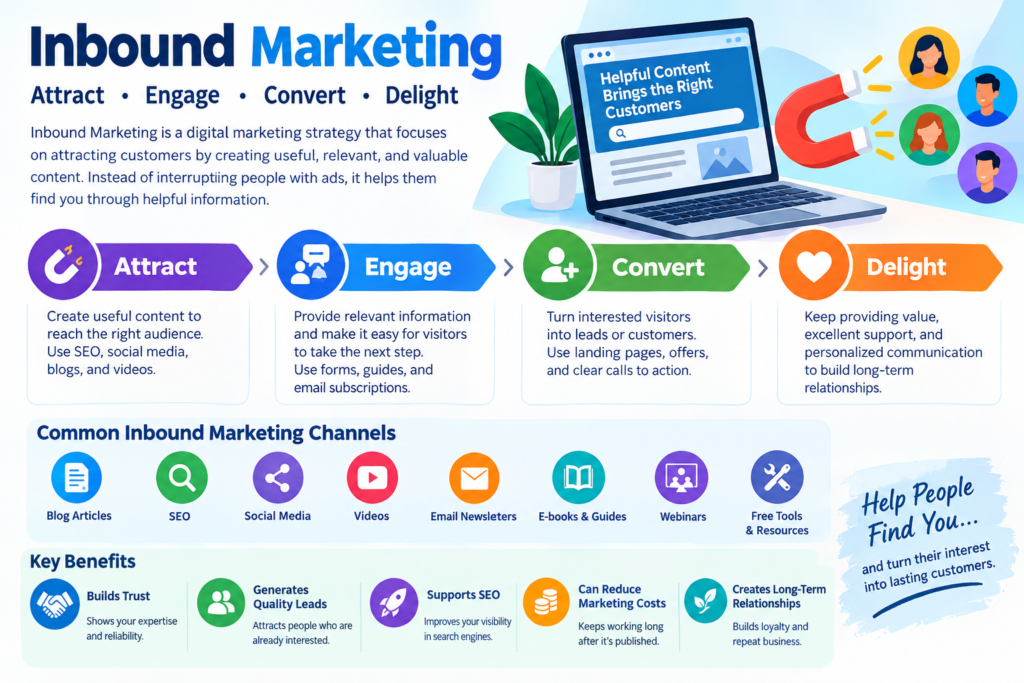
Inbound Marketing is a digital marketing strategy that focuses on attracting customers by creating useful, relevant, and valuable content. Instead of directly interrupting people with advertisements, businesses use helpful information to bring potential customers to their websites, social media pages, or other online platforms.
The goal of Inbound Marketing is to build trust with customers and guide them through the buying journey.
What Is Inbound Marketing?
Inbound Marketing is a customer-focused approach that attracts people who are already interested in a particular product, service, or topic. Businesses create content that answers questions, solves problems, and provides useful information.
Common examples include:
- Blog articles
- Search engine optimization (SEO)
- Social media content
- Educational videos
- Email newsletters
- E-books and guides
- Webinars
- Free tools and resources
For example, a company selling accounting software might publish an article titled “How to Manage Small Business Expenses.” Someone searching for this information may discover the article through Google and later become interested in the company’s software.
How Inbound Marketing Works
Inbound Marketing generally follows four important stages:
1. Attract
The first step is to attract the right audience. Businesses publish useful content designed to appear where potential customers are searching for information.
SEO, blog posts, social media, and videos can help attract visitors.
2. Engage
Once visitors arrive, businesses need to provide relevant information and make it easy for them to take the next step.
This can include:
- Contact forms
- Email subscriptions
- Product information
- Helpful guides
- Free consultations
- Special offers
3. Convert
The next goal is to turn interested visitors into leads or customers. Businesses can use landing pages, forms, email campaigns, and clear calls to action to encourage conversions.
4. Delight
Inbound Marketing does not end when someone becomes a customer. Businesses should continue providing useful information, customer support, and personalized communication to build long-term relationships.
Benefits of Inbound Marketing
A well-planned Inbound Marketing strategy can provide several benefits.
Builds Trust
Helpful and educational content can establish a business as a reliable source of information.
Generates Quality Leads
Because inbound strategies target people who are already searching for information, they can attract more relevant potential customers.
Supports SEO
Regularly publishing useful, keyword-focused content can help a website gain visibility in search engines.
Can Reduce Marketing Costs
Content can continue attracting visitors long after it has been published, making inbound strategies potentially more cost-effective over time.
Creates Long-Term Relationships
Inbound Marketing focuses on providing value throughout the customer journey, helping businesses build stronger relationships with their audience.
Inbound Marketing vs. Outbound Marketing
Inbound Marketing attracts customers through useful content and online experiences. Outbound marketing usually involves actively pushing promotional messages toward an audience.
For example, a blog article that answers a customer’s question is an inbound approach, while a traditional advertising campaign that promotes a product directly is an outbound approach.
Both strategies can be useful, but the right choice depends on the business, target audience, budget, and marketing goals.
Inbound Marketing Strategies
Businesses can use several strategies to improve their inbound efforts.
Content Marketing
Create useful articles, guides, videos, and other resources that answer customer questions.
SEO
Optimize website content so potential customers can find it through search engines.
Social Media Marketing
Share educational and engaging content on platforms where the target audience spends time.
Email Marketing
Use email to provide valuable information, follow up with leads, and maintain relationships with existing customers.
Landing Pages
Create focused pages designed to encourage visitors to complete a specific action, such as signing up or requesting information.
How to Create an Inbound Marketing Strategy
A simple Inbound Marketing plan can follow these steps:
- Define your target audience – Understand who your ideal customers are.
- Identify their problems – Find out what questions and challenges they have.
- Create useful content – Develop content that provides practical solutions.
- Optimize for search engines – Use relevant keywords and good SEO practices.
- Promote your content – Share it through social media, email, and other channels.
- Capture leads – Use forms, newsletters, offers, or other lead-generation methods.
- Nurture prospects – Continue providing useful information until they are ready to buy.
- Measure results – Track traffic, leads, conversions, and customer engagement.
Examples of Inbound Marketing
A few practical examples include:
- A software company publishing tutorials about using business software.
- A travel company creating destination guides.
- A financial website publishing personal finance articles.
- A fitness business creating educational workout videos.
- An online store publishing buying guides and product comparisons.
These approaches help businesses attract people by providing information before asking them to make a purchase.
Conclusion
Inbound Marketing is a customer-focused strategy that attracts potential customers through valuable content, SEO, social media, email marketing, and helpful online experiences. Instead of simply pushing advertisements to people, businesses provide information that helps customers make better decisions.
When implemented consistently, Inbound Marketing can increase website traffic, generate quality leads, build trust, and support long-term business growth.