Outbound Marketing: A Simple Guide to Reaching Customers
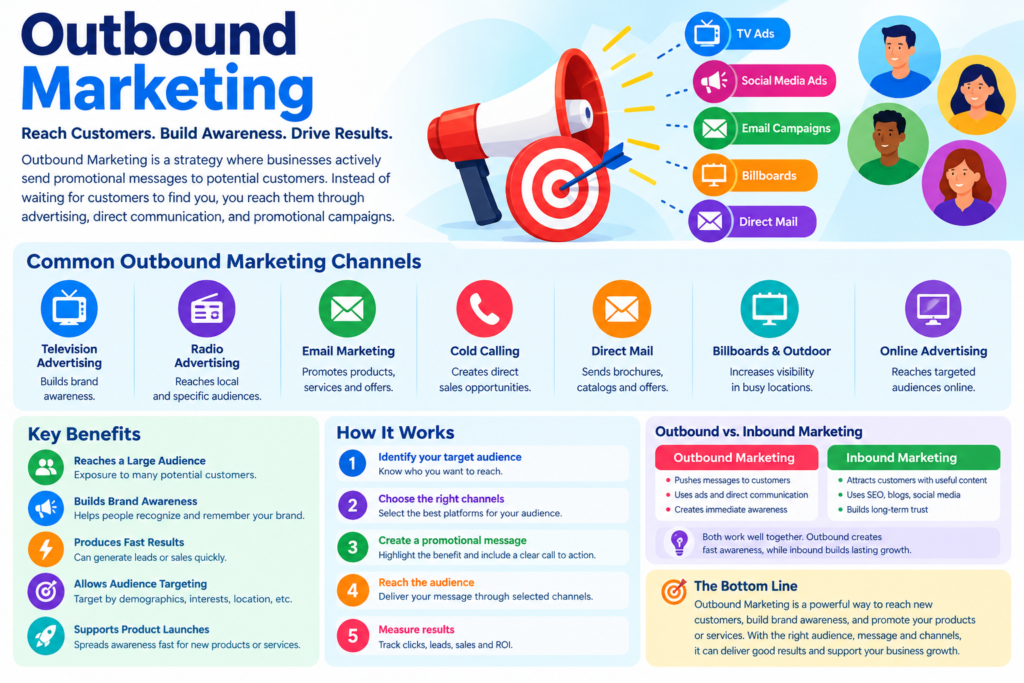
Outbound Marketing is a marketing strategy where businesses actively send promotional messages to potential customers. Instead of waiting for customers to discover a business, companies use advertising, direct communication, and promotional campaigns to reach their target audience.
Common examples include television advertisements, radio commercials, email campaigns, direct mail, cold calling, billboards, and online advertising.
What Is Outbound Marketing?
Outbound Marketing focuses on delivering a company’s message directly to a large or targeted audience. The main goal is to create awareness, generate interest, and encourage people to take action.
For example, a company launching a new smartphone might use television advertisements, social media ads, billboards, and email promotions to reach potential buyers.
Unlike inbound strategies, where customers often find a business through content and search engines, Outbound Marketing takes the message directly to the audience.
How Outbound Marketing Works
A typical Outbound Marketing campaign follows several steps:
1. Identify the Target Audience
Businesses first determine who they want to reach based on factors such as age, location, interests, industry, or purchasing behavior.
2. Choose the Right Marketing Channel
The company selects channels that are appropriate for its audience. These may include television, radio, email, social media advertising, or direct mail.
3. Create a Promotional Message
The marketing message should clearly explain the product, service, offer, or benefit and encourage the audience to take action.
4. Reach the Audience
The message is distributed through the selected channels. Businesses may reach thousands or even millions of potential customers.
5. Measure Results
Companies can track metrics such as impressions, clicks, leads, sales, conversion rates, and return on investment.
Common Outbound Marketing Channels
Businesses use many channels for Outbound Marketing, including:
Television Advertising
Television advertisements can reach large audiences and are useful for building brand awareness.
Radio Advertising
Radio remains useful for reaching local audiences and specific listener groups.
Email Marketing
Promotional emails can inform existing customers and potential buyers about products, services, discounts, and special offers.
Cold Calling
Sales representatives contact potential customers directly to introduce products or services and generate sales opportunities.
Direct Mail
Companies can send brochures, catalogs, postcards, or promotional materials directly to customers.
Billboards and Outdoor Advertising
Billboards, signs, posters, and other outdoor advertisements can increase visibility in busy locations.
Online Advertising
Businesses can use search ads, display advertising, social media ads, and video advertising to reach specific audiences online.
Benefits of Outbound Marketing
Outbound Marketing can provide several important benefits.
Reaches a Large Audience
Advertising campaigns can expose a business to many potential customers in a relatively short period.
Builds Brand Awareness
Repeated exposure can help customers recognize and remember a brand.
Produces Fast Results
Some outbound campaigns can generate traffic, leads, or sales shortly after they are launched.
Allows Audience Targeting
Digital advertising platforms can allow businesses to target audiences based on demographics, interests, location, and online behavior.
Supports Product Launches
Outbound campaigns can quickly spread awareness when a company introduces a new product or service.
Outbound Marketing vs. Inbound Marketing
The main difference between Outbound Marketing and Inbound Marketing is how customers are reached.
Outbound Marketing actively pushes promotional messages toward potential customers. Inbound Marketing attracts customers by providing useful content and information that they are already looking for.
For example:
- Outbound Marketing: A company pays for an advertisement promoting a new product.
- Inbound Marketing: The company publishes a helpful article explaining how to choose the right product.
Many businesses use both approaches together. Outbound methods can create immediate awareness, while inbound strategies can build long-term organic traffic and trust.
Examples of Outbound Marketing
Here are some practical examples:
- A supermarket sends promotional SMS messages about a weekend discount.
- A car company runs television advertisements for a new vehicle.
- A software company sends promotional emails to potential customers.
- A local business places advertisements on billboards.
- A sales representative calls businesses to offer a service.
- A company runs paid advertisements on social media.
- A brand sponsors a popular television or sporting event.
How to Create an Outbound Marketing Strategy
A successful Outbound Marketing strategy should be carefully planned.
- Define your marketing goal – Decide whether you want awareness, leads, sales, or customer engagement.
- Identify your audience – Understand who is most likely to need your product or service.
- Choose the right channels – Select marketing channels that match your audience and budget.
- Create a clear message – Explain the main benefit and include a strong call to action.
- Set a realistic budget – Determine how much you can spend on advertising and promotion.
- Launch the campaign – Deliver your message through the selected channels.
- Track performance – Monitor clicks, leads, sales, and other important metrics.
- Improve the campaign – Use the results to adjust your message, audience, or marketing channels.
Challenges of Outbound Marketing
Although Outbound Marketing can be effective, it also has some challenges.
- Advertising can become expensive.
- People may ignore promotional messages.
- Some audiences may find excessive advertising intrusive.
- Competition for customer attention can be high.
- Poorly targeted campaigns can waste money.
- Results may depend heavily on the quality of the message and targeting.
Businesses can reduce these challenges by understanding their audience and using relevant, well-targeted campaigns.
Conclusion
Outbound Marketing is a direct approach to reaching potential customers through advertising, promotional messages, sales calls, email campaigns, outdoor advertising, and other communication channels. It can help businesses build brand awareness, reach large audiences, promote new products, and generate faster results.
When combined with effective inbound strategies, Outbound Marketing can become an important part of a complete marketing strategy. The key is to choose the right audience, channel, message, and performance measurements.