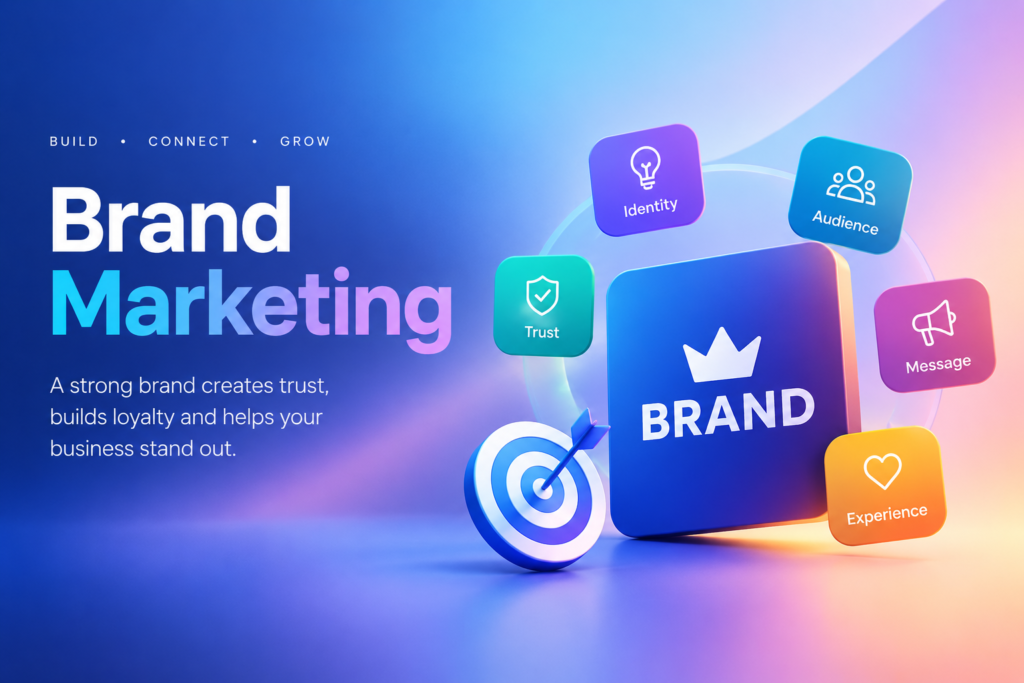
Brand Marketing is a marketing strategy focused on building a strong and recognizable identity for a business. Instead of promoting only individual products or services, Brand Marketing helps customers understand what a company represents, what makes it different, and why they should trust it.
A strong brand can influence purchasing decisions, create customer loyalty, and help a business stand out in a competitive market.
What Is Brand Marketing?
Brand Marketing is the process of promoting a company, its values, personality, and overall identity. It focuses on creating a consistent image across websites, social media, advertising, packaging, customer service, and other customer interactions.
For example, companies such as Apple have built strong brands by consistently communicating ideas such as innovation, simplicity, and premium design.
Why Is Brand Marketing Important?
Brand Marketing is important because customers often choose businesses they recognize and trust. A strong brand can make a company easier to remember and can create an emotional connection with its audience.
Key benefits include:
- Builds brand awareness: Helps more people recognize your business.
- Creates trust: Consistent branding can make a company appear more reliable.
- Improves customer loyalty: Customers may continue buying from brands they value.
- Differentiates the business: A strong brand helps separate your company from competitors.
- Supports long-term growth: A recognizable brand can make new products and services easier to introduce.
Key Elements of Brand Marketing
Effective Brand Marketing usually includes several important elements.
1. Brand Identity
Brand identity includes the visual and verbal elements that represent a business. This can include the logo, colors, typography, slogan, tone of voice, and overall design.
2. Brand Values
Customers want to know what a company stands for. Clear values help businesses communicate their purpose and build stronger relationships with their audience.
3. Target Audience
Understanding your target audience is essential. Businesses should know their customers’ needs, interests, problems, and purchasing behavior.
4. Brand Message
A clear brand message explains what the business offers and why customers should choose it. The message should remain consistent across different marketing channels.
5. Customer Experience
Brand Marketing is not only about advertisements. Every interaction with a customer can affect how people perceive a brand, including customer service, website experience, product quality, and communication.
Brand Marketing Strategies
Businesses can use different strategies to strengthen their brands.
Social Media Marketing: Use platforms such as Facebook, Instagram, LinkedIn, TikTok, and YouTube to communicate with customers and increase brand awareness.
Content Marketing: Publish useful articles, videos, guides, and other content that provides value to the target audience.
Influencer Marketing: Work with relevant influencers or industry experts to introduce the brand to new audiences.
Advertising: Use online and offline advertising to increase visibility and communicate the brand’s message.
Storytelling: Share the company’s story, mission, values, and customer experiences to create a stronger emotional connection.
Brand Marketing vs. Product Marketing
Brand Marketing focuses on the overall identity and reputation of a company, while product marketing focuses more specifically on promoting an individual product or service.
For example, Brand Marketing might communicate what a company represents, while Product Marketing explains the features, benefits, and value of a particular product.
Both approaches can work together. A strong brand can make product marketing more effective because customers already recognize and trust the company.
How to Create a Brand Marketing Strategy
A simple Brand Marketing strategy can follow these steps:
- Define your brand purpose.
- Identify your target audience.
- Research your competitors.
- Develop a clear brand identity.
- Create a consistent brand message.
- Choose the right marketing channels.
- Create valuable and consistent content.
- Monitor customer feedback.
- Measure brand awareness and engagement.
- Improve the strategy based on results.
Measuring Brand Marketing Success
Businesses can use several metrics to measure the effectiveness of Brand Marketing, including:
- Brand awareness
- Website traffic
- Social media engagement
- Customer retention
- Direct searches for the brand
- Customer reviews
- Share of market
- Leads and sales
These measurements help businesses understand whether their branding efforts are reaching the right audience and producing meaningful results.
Conclusion
Brand Marketing is an important part of building a successful business. It goes beyond selling products by creating a recognizable identity, communicating clear values, and developing trust with customers.
When a business consistently delivers a strong message and positive customer experience, it can build greater awareness, customer loyalty, and long-term growth.