
Personalized Marketing: A Complete Guide to Personalized Marketing
Personalized Marketing is a marketing approach that uses customer information, interests, behavior, and preferences to create more relevant messages, offers, and experiences. Instead of showing the same content to everyone, businesses tailor their marketing to different customers based on what they are likely to need or want.
What Is Personalized Marketing?
Personalized Marketing means customizing marketing campaigns for individual customers or specific customer groups. Businesses can use information such as browsing history, previous purchases, location, interests, and interactions with a brand to deliver more relevant content.
For example, an online store may recommend products based on what a customer previously viewed or purchased. This makes the shopping experience more relevant and can encourage the customer to make another purchase.
Why Is Personalized Marketing Important?
Customers receive a large amount of marketing content every day. Generic advertisements can easily be ignored, while relevant messages are more likely to attract attention.
Personalized Marketing can help businesses:
- Improve customer engagement
- Increase conversion rates
- Build stronger customer relationships
- Improve the customer experience
- Increase repeat purchases
- Make marketing campaigns more effective
- Deliver relevant offers at the right time
How Does Personalized Marketing Work?
A successful Personalized Marketing strategy usually involves several steps.
1. Collect Customer Data
Businesses collect useful information from website activity, purchases, surveys, email interactions, and other customer interactions.
2. Understand Customer Preferences
The collected information can help businesses identify customer interests, buying behavior, and preferences.
3. Segment the Audience
Customers can be divided into groups based on factors such as age, location, interests, purchase history, or behavior.
4. Create Relevant Content
Businesses then create messages and offers that are appropriate for each customer group or individual.
5. Deliver the Message
Personalized content can be delivered through email, websites, social media, mobile applications, advertisements, and other marketing channels.
Examples of Personalized Marketing
There are many ways businesses can use personalization.
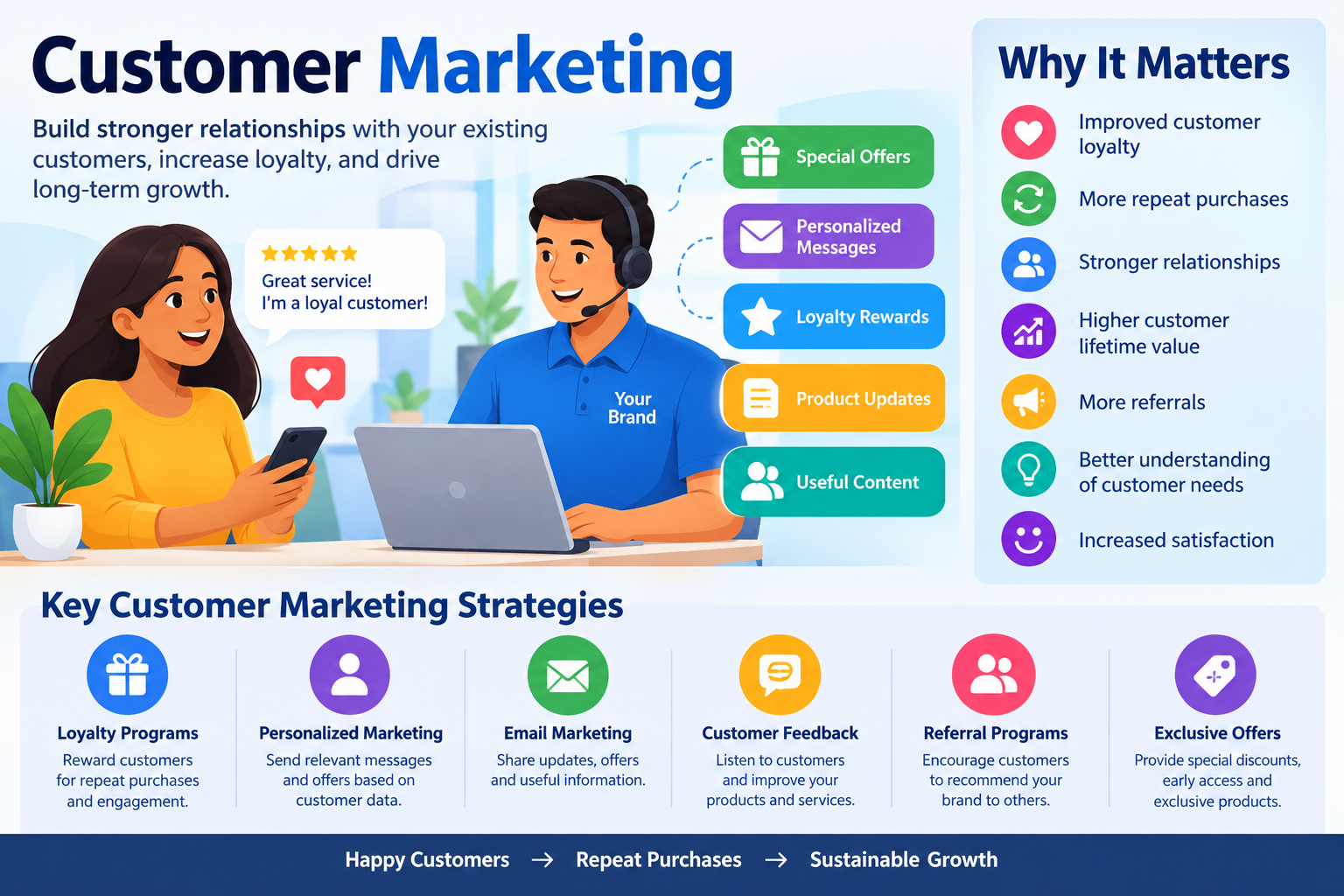
Personalized Email Marketing
A company can send customers emails based on their previous purchases or interests. For example, a clothing store may recommend new products similar to items a customer previously purchased.
Product Recommendations
E-commerce websites can recommend products based on browsing and purchasing behavior.
Personalized Offers
Businesses can provide special discounts or promotions based on customer preferences or purchasing history.
Personalized Website Content
A website can display different recommendations or content depending on the visitor’s interests and previous activity.
Personalized Advertising
Advertising platforms can show users advertisements based on their interests and online behavior, subject to applicable privacy rules and user choices.
Benefits of Personalized Marketing
Better Customer Experience
Customers are more likely to appreciate marketing messages that are relevant to their needs.
Higher Engagement
Personalized content can encourage customers to interact with emails, advertisements, websites, and social media posts.
Increased Sales
Relevant recommendations and offers can help customers discover products or services that fit their needs.
Stronger Customer Loyalty
When customers receive useful and relevant communication, they may develop a stronger relationship with the brand.
More Efficient Marketing
Instead of sending the same message to everyone, businesses can focus their marketing efforts on specific audiences.
Challenges of Personalized Marketing
Although Personalized Marketing offers many benefits, businesses also need to consider several challenges.
Data privacy: Businesses must handle customer information responsibly and follow applicable privacy laws.
Data quality: Incorrect or outdated customer information can result in irrelevant recommendations.
Technology requirements: Effective personalization may require customer data platforms, analytics tools, marketing automation, or other technology.
Over-personalization: Too much personalization can make customers uncomfortable if businesses appear to know more about them than expected.
Personalized Marketing Strategies
Businesses can improve their personalization efforts by using strategies such as:
- Segmenting customers based on behavior
- Using personalized email campaigns
- Recommending relevant products
- Creating personalized landing pages
- Offering location-based content where appropriate
- Using customer purchase history
- Testing different personalized messages
- Allowing customers to control their communication preferences
Personalized Marketing vs. Traditional Marketing
Traditional marketing often delivers the same message to a broad audience. Personalized Marketing focuses on making the message more relevant to individual customers or specific customer segments.
For example, a traditional campaign might advertise the same shoe to everyone. A personalized campaign could recommend different shoes based on a customer’s previous purchases, preferences, or browsing behavior.
Tips for Successful Personalized Marketing
To create an effective Personalized Marketing strategy:
- Know your audience – Understand customer needs and preferences.
- Use accurate data – Keep customer information reliable and up to date.
- Provide value – Personalization should make the customer experience better.
- Respect privacy – Be transparent about how customer information is used.
- Test your campaigns – Measure results and improve your approach.
- Avoid excessive personalization – Keep communication helpful rather than intrusive.
The Future of Personalized Marketing
Technology, artificial intelligence, automation, and customer analytics are making it easier for businesses to provide personalized experiences at scale. Companies can increasingly analyze customer behavior and use those insights to deliver more relevant content and recommendations.
However, successful personalization will depend not only on technology but also on customer trust. Businesses that combine useful personalization with responsible data practices can create stronger and longer-lasting customer relationships.
Conclusion
Personalized Marketing helps businesses deliver relevant messages, offers, and experiences based on customer needs and preferences. By using customer data responsibly, segmenting audiences, and creating useful content, businesses can improve engagement, customer satisfaction, and sales.
For businesses competing in a crowded digital marketplace, Personalized Marketing can be an effective way to make marketing more relevant and customer-focused.