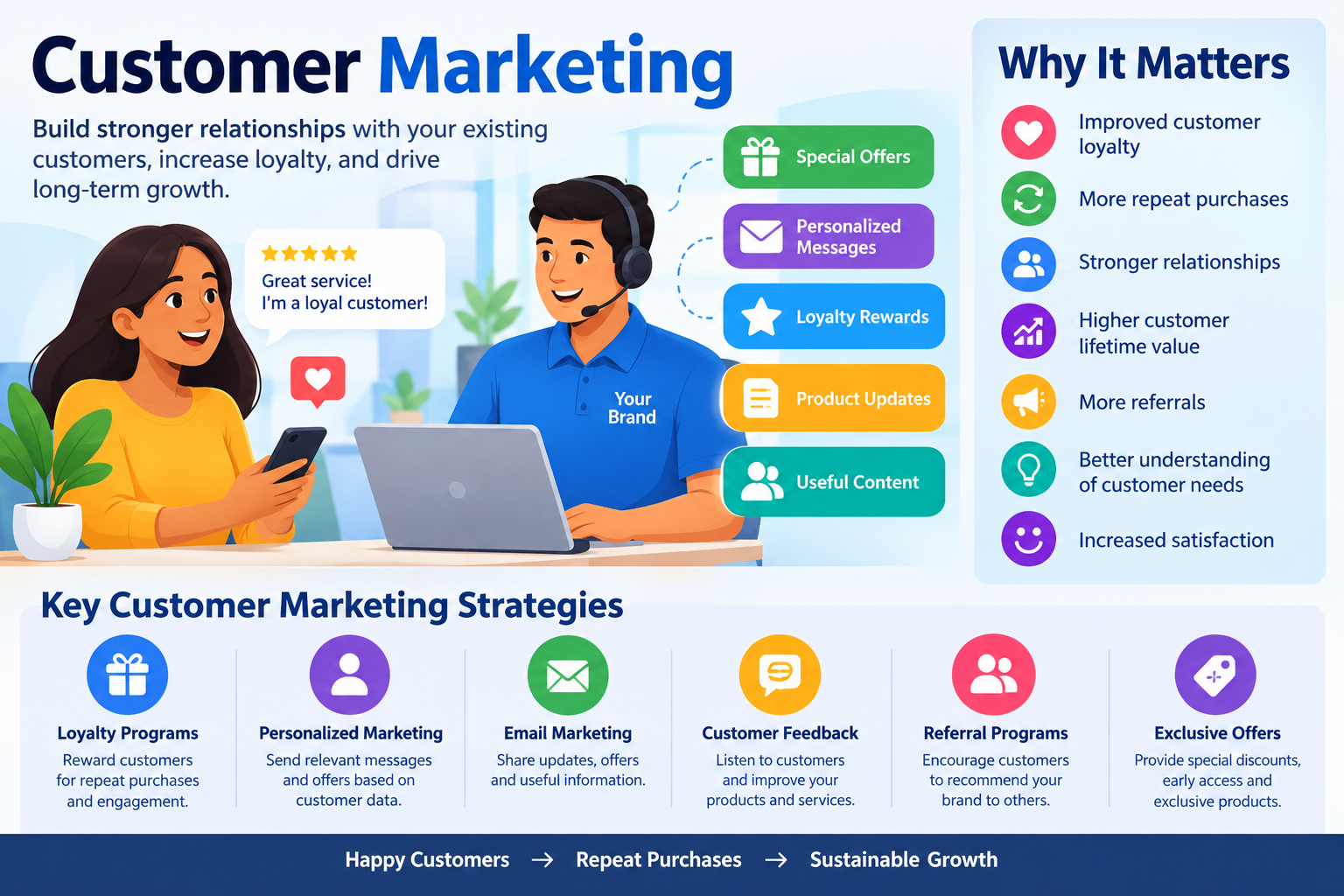
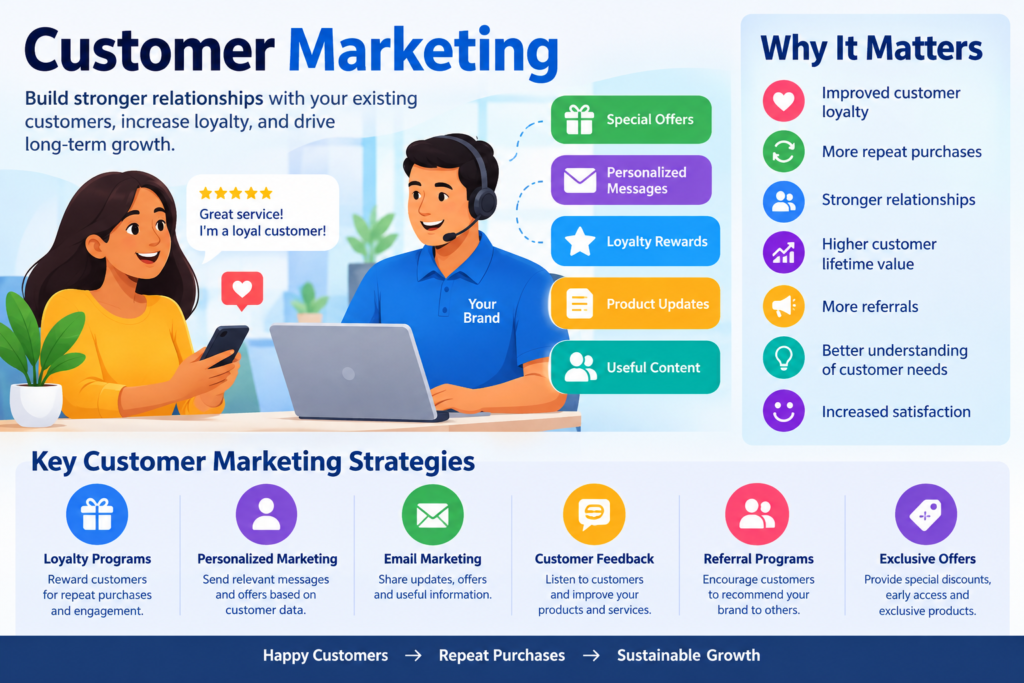
Customer Marketing is a marketing strategy focused on building strong relationships with existing customers and encouraging them to remain loyal, make repeat purchases, and recommend a business to others. Instead of concentrating only on attracting new customers, Customer Marketing helps businesses get more value from the customers they already have.
What Is Customer Marketing?
Customer Marketing involves communicating with existing customers through personalized messages, loyalty programs, special offers, educational content, product updates, and customer-focused campaigns.
The main goal is to make customers feel valued and give them reasons to continue choosing the business.
For example, an online store might send existing customers personalized product recommendations or offer them a discount on their next purchase.
Why Is Customer Marketing Important?
Customer Marketing is important because retaining existing customers can help a business build stable, long-term revenue. Loyal customers may also purchase more frequently and recommend the company to friends and family.
Key benefits include:
- Improved customer loyalty
- More repeat purchases
- Stronger customer relationships
- Higher customer lifetime value
- More referrals and recommendations
- Better understanding of customer needs
- Increased customer satisfaction
Customer Marketing vs. Traditional Marketing
Traditional marketing often focuses on attracting potential customers. Customer Marketing focuses primarily on people who have already purchased from or interacted with a business.
For example:
- Traditional Marketing: A company runs an advertisement to attract new customers.
- Customer Marketing: The same company sends existing customers a loyalty reward to encourage another purchase.
Both approaches can work together as part of a complete marketing strategy.
Common Customer Marketing Strategies
1. Loyalty Programs
Loyalty programs reward customers for repeat purchases or continued engagement. Points, discounts, exclusive offers, and membership benefits are common examples.
2. Personalized Marketing
Businesses can use customer information to provide more relevant messages and offers. Personalization can make communication feel more useful and less generic.
3. Email Marketing
Email is an effective way to stay connected with existing customers. Businesses can send product updates, special offers, useful information, and personalized recommendations.
4. Customer Feedback
Asking customers for feedback helps businesses understand what they like and where improvements are needed. It also shows customers that their opinions matter.
5. Referral Programs
Referral programs encourage satisfied customers to recommend a business to others. Businesses may provide rewards to customers who successfully refer new customers.
6. Exclusive Offers
Special discounts, early access, and exclusive products can make existing customers feel appreciated and encourage them to remain loyal.
Examples of Customer Marketing
A clothing company could send customers a personalized message based on their previous purchases. A software company might provide existing users with tutorials, product updates, and special upgrade offers.
A restaurant could offer loyal customers a reward after several visits. These activities are examples of Customer Marketing because they focus on strengthening relationships with existing customers.
How to Create a Customer Marketing Strategy
A simple Customer Marketing strategy can follow these steps:
- Understand your customers – Learn about their needs, preferences, and buying behavior.
- Segment your customers – Group customers according to factors such as purchase history or engagement.
- Create relevant offers – Provide useful rewards, content, or promotions.
- Communicate consistently – Stay connected without overwhelming customers.
- Personalize the experience – Make messages and offers relevant to individual customers.
- Collect feedback – Ask customers what they think about your products and services.
- Measure results – Track repeat purchases, retention, engagement, referrals, and customer lifetime value.
Customer Marketing Metrics
Businesses can measure the success of Customer Marketing using several important metrics:
- Customer retention rate
- Repeat purchase rate
- Customer lifetime value (CLV)
- Customer satisfaction
- Email engagement
- Referral rate
- Churn rate
- Revenue from existing customers
These measurements help businesses understand whether their efforts are successfully improving customer relationships.
Tips for Effective Customer Marketing
To make Customer Marketing more effective:
- Focus on providing real value.
- Avoid sending too many promotional messages.
- Use customer data responsibly.
- Personalize communication where appropriate.
- Reward loyal customers.
- Respond quickly to customer concerns.
- Use feedback to improve products and services.
- Maintain a consistent customer experience across channels.
Conclusion
Customer Marketing helps businesses move beyond simply acquiring customers and focus on building long-term relationships. By using loyalty programs, personalized communication, customer feedback, exclusive offers, and referral strategies, businesses can increase customer satisfaction and encourage repeat purchases.
A strong Customer Marketing strategy can help a business retain customers, strengthen its brand, and create sustainable long-term growth.