
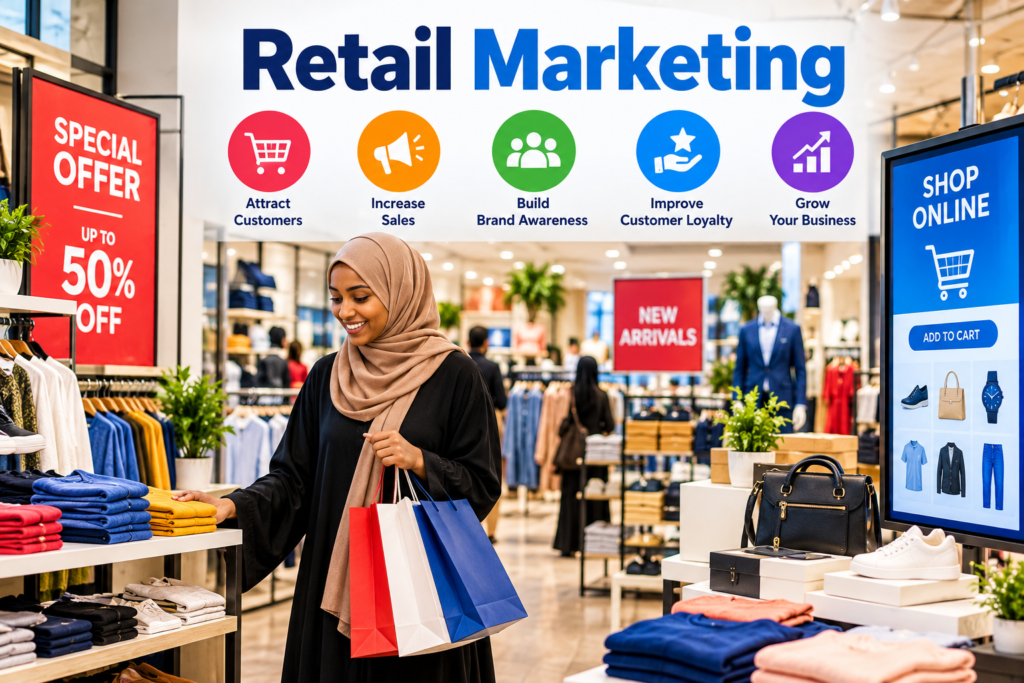
Retail Marketing: A Complete Guide for Businesses
What Is Retail Marketing?
Retail Marketing is the process of promoting products and services to attract customers, increase sales, and build long-term customer relationships. It includes the strategies retailers use to encourage people to visit their stores, explore their products, and make purchases.
Retail Marketing can be used by physical stores, supermarkets, shopping malls, online shops, and businesses that sell products through multiple channels.
For example, a clothing store may use discounts, social media advertisements, attractive product displays, and loyalty programs to attract customers and increase sales.
Why Is Retail Marketing Important?
Retail Marketing helps businesses reach their target customers and compete effectively in the marketplace. It allows retailers to communicate the value of their products and create a better shopping experience.
Here are some key benefits of Retail Marketing:
- Increases sales: Effective promotions encourage customers to purchase products.
- Builds brand awareness: Marketing helps customers recognize and remember a business.
- Attracts new customers: Advertising and special offers introduce products to new audiences.
- Improves customer loyalty: Loyalty programs and personalized offers encourage repeat purchases.
- Enhances the shopping experience: Clear product information, attractive displays, and helpful service make shopping easier.
- Provides competitive advantages: Retailers can differentiate themselves from competing businesses.
The 4 Ps of Retail Marketing
The 4 Ps are important elements of a successful Retail Marketing strategy.
1. Product
A product is the item or service a retailer offers to customers. Retailers should understand customer needs and provide products that meet those needs.
For example, a supermarket may offer fresh food, household supplies, personal care products, and other everyday essentials.
2. Price
Price refers to the amount customers pay for a product. Retailers must choose prices that attract customers while allowing the business to earn a profit.
Common pricing strategies include discounts, seasonal offers, competitive pricing, and special bundle deals.
3. Place
Place refers to where and how customers can purchase products. Retailers may sell through physical stores, websites, mobile applications, or social media platforms.
Making products accessible and convenient helps customers complete their purchases.
4. Promotion
Promotion includes the activities used to inform customers about products and encourage sales. Examples include social media marketing, email campaigns, advertisements, coupons, and in-store promotions.
A good promotional strategy communicates the product’s benefits and gives customers a reason to buy.
Common Retail Marketing Strategies
Businesses can use different strategies to attract customers and increase revenue.
1. In-Store Marketing
In-store marketing uses activities inside a physical shop to influence purchasing decisions. Retailers may use product displays, signs, demonstrations, samples, and special offers.
For example, a supermarket may place popular products near the entrance to attract customers’ attention.
2. Digital Retail Marketing
Digital Retail Marketing involves promoting products through online channels such as websites, search engines, social media, and email.
Retailers can use these channels to reach specific audiences, advertise new products, and communicate directly with customers.
3. Social Media Marketing
Social media platforms help retailers showcase products, share promotions, respond to questions, and interact with customers.
For example, a shoe retailer can post product photos and videos on Instagram or Facebook to attract potential buyers.
4. Email Marketing
Email marketing allows retailers to send product updates, special offers, seasonal promotions, and personalized recommendations to subscribers.
When used appropriately, email marketing can encourage repeat purchases and keep customers informed about new products.
5. Loyalty Programs
Loyalty programs reward customers for making repeat purchases. Rewards may include points, discounts, exclusive offers, or special membership benefits.
These programs can strengthen customer relationships and encourage customers to continue shopping with the same retailer.
6. Seasonal Promotions
Seasonal marketing takes advantage of periods when customers are more likely to shop, such as holidays, back-to-school periods, and end-of-season sales.
Retailers can offer relevant promotions during these periods to increase customer interest and sales.
Retail Marketing Examples
Retail Marketing is used in many types of businesses.
- Clothing stores: Offer seasonal discounts and promote new collections through social media.
- Supermarkets: Use loyalty cards, weekly promotions, and product displays to encourage purchases.
- Electronics retailers: Demonstrate products, compare features, and offer promotional bundles.
- Online stores: Use personalized recommendations, email campaigns, and abandoned-cart reminders.
- Beauty shops: Offer product samples, demonstrations, and loyalty rewards.
These examples show how retailers can adapt their marketing strategies to their products and target customers.
How to Create an Effective Retail Marketing Plan
A clear marketing plan helps retailers use their time and budget effectively.
Step 1: Identify Your Target Customers
Understand who is most likely to purchase your products. Consider their needs, interests, location, shopping habits, and budget.
Step 2: Set Clear Marketing Goals
Decide what you want to achieve, such as increasing monthly sales, attracting new customers, improving repeat purchases, or growing online traffic.
Step 3: Choose the Right Marketing Channels
Select channels that your target customers use regularly. A local shop may benefit from community promotions and social media, while a large online retailer may focus on search engine marketing and email campaigns.
Step 4: Create Attractive Offers
Develop promotions that provide genuine value to customers. Examples include limited-time discounts, product bundles, free delivery, and loyalty rewards.
Step 5: Measure Your Results
Track sales, customer visits, conversion rates, average order value, and repeat purchases. Use this information to identify successful strategies and improve weaker campaigns.
How to Measure Retail Marketing Performance
Retailers should regularly measure their marketing results to understand what works best.
Important performance indicators include:
- Sales revenue: The total income generated from product sales.
- Conversion rate: The percentage of visitors who make a purchase.
- Average order value: The average amount customers spend per transaction.
- Customer retention rate: The percentage of customers who continue buying from the business over a specific period.
- Marketing return on investment (ROI): The financial return generated by marketing activities compared with their costs.
- Foot traffic: The number of people who visit a physical store.
Monitoring these indicators helps retailers make informed decisions and use their marketing budgets more effectively.
Challenges of Retail Marketing
Although Retail Marketing offers many benefits, businesses may face several challenges.
Strong competition: Retailers must find ways to differentiate their products, prices, and customer service.
Changing customer preferences: Shopping habits and product demand can change over time.
Limited marketing budgets: Small businesses may struggle to compete with larger retailers that spend more on advertising.
Price sensitivity: Customers often compare prices before purchasing, making it difficult for retailers to maintain profit margins.
Customer retention: Attracting customers is only part of the challenge; businesses must also give them reasons to return.
Retailers can address these challenges by understanding their customers, providing reliable service, monitoring market trends, and developing effective marketing strategies.
Conclusion
Retail Marketing is an essential part of running a successful retail business. It helps companies attract customers, promote products, increase sales, and build long-term relationships.
By combining effective pricing, attractive product displays, digital advertising, customer loyalty programs, and performance measurement, retailers can improve the shopping experience and strengthen their position in the market.
Whether a business operates a small local shop or a large online store, a well-planned Retail Marketing strategy can support sustainable growth and long-term success.