
Omnichannel Marketing: A Complete Guide for Businesses
What Is Omnichannel Marketing?
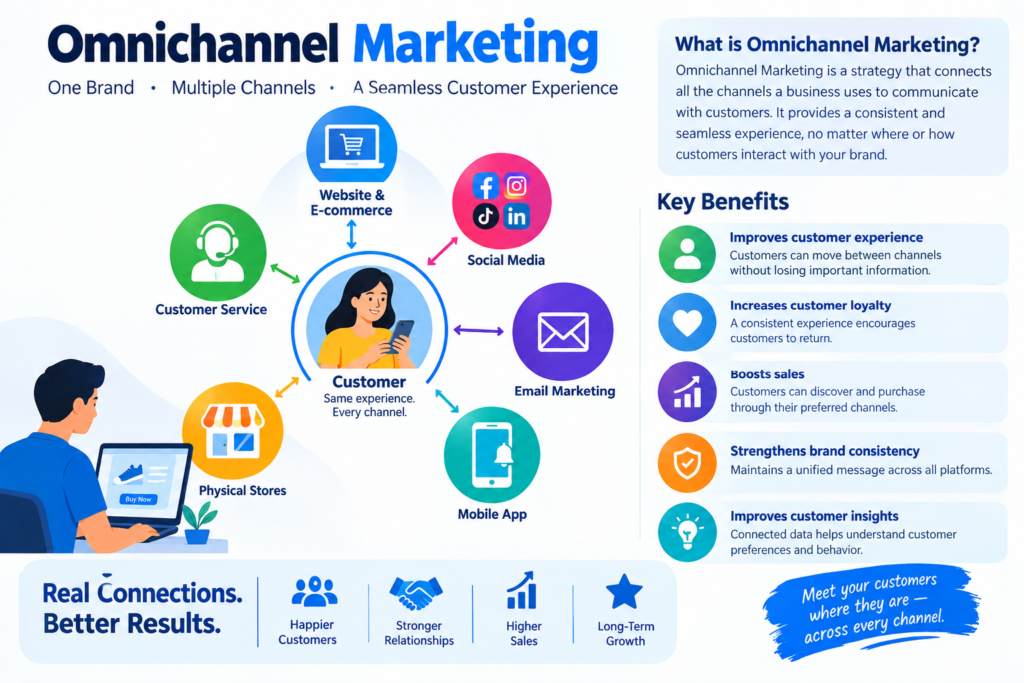
Omnichannel Marketing is a marketing strategy that connects all the channels a business uses to communicate with customers. These channels may include websites, social media, email, mobile apps, physical stores, and customer service.
The main goal of Omnichannel Marketing is to provide customers with a consistent and seamless experience, regardless of how or where they interact with a business.
For example, a customer might discover a product on Facebook, visit the company’s website to learn more, receive a promotional email, and then purchase the product in a physical store. With Omnichannel Marketing, all these interactions work together to create one connected customer experience.
Why Is Omnichannel Marketing Important?
Modern customers use multiple channels when researching products and making purchasing decisions. Businesses that connect these channels can build stronger customer relationships and make shopping easier.
Here are some key reasons why Omnichannel Marketing is important:
- Improves customer experience: Customers can move between channels without losing important information or support.
- Increases customer loyalty: A consistent experience encourages customers to return.
- Boosts sales: Customers can discover and purchase products through their preferred channels.
- Strengthens brand consistency: Businesses can maintain a unified message across different platforms.
- Improves customer insights: Connected data helps businesses understand customer preferences and behavior.
Key Channels Used in Omnichannel Marketing
Omnichannel Marketing combines several communication and sales channels to create a unified customer journey.
1. Website and E-Commerce
A business website allows customers to explore products, compare prices, read information, and make purchases. Connecting the website with other channels helps customers continue their shopping journey smoothly.
2. Social Media Marketing
Platforms such as Facebook, Instagram, TikTok, and LinkedIn help businesses attract customers, share content, answer questions, and promote products.
3. Email Marketing
Email allows businesses to send personalized offers, order confirmations, product recommendations, and updates based on customer interests and activities.
4. Mobile Applications
Mobile apps can provide personalized notifications, loyalty rewards, order tracking, and convenient purchasing options.
5. Physical Stores
Retail stores remain important because customers can see products in person, receive assistance, and make purchases. Integrating stores with digital channels creates a more convenient shopping experience.
6. Customer Service
Phone calls, live chat, email support, and messaging platforms help customers receive consistent assistance. Ideally, support teams can access relevant customer information without requiring customers to explain their situation repeatedly.
Omnichannel Marketing vs. Multichannel Marketing
Omnichannel Marketing and multichannel marketing both use multiple platforms, but they differ in how those platforms work together.
| Feature | Omnichannel Marketing | Multichannel Marketing |
|---|---|---|
| Main approach | Connected channels | Multiple separate channels |
| Customer experience | Integrated and consistent | May vary between channels |
| Data sharing | Channels share relevant information | Data may remain separated |
| Personalization | Based on connected interactions | Often channel-specific |
| Main goal | Create a seamless customer journey | Reach customers through different channels |
Example: A multichannel business may promote a product on Facebook and sell it through its website, but the two channels may operate separately. An omnichannel business connects these interactions so customers receive a more consistent experience.
How to Create an Effective Omnichannel Marketing Strategy
Businesses can build a successful Omnichannel Marketing strategy by following these practical steps.
Step 1: Understand Your Customers
Identify your target audience, preferred communication channels, shopping habits, and common problems. Customer surveys, website analytics, and feedback can help you understand what customers need.
Step 2: Identify Your Marketing Channels
Choose the channels your customers use most frequently. These may include social media, email, your website, mobile apps, physical locations, and customer support.
Focus on the channels that provide the most value rather than trying to use every available platform.
Step 3: Connect Your Systems
Use suitable customer relationship management (CRM), marketing automation, inventory, and sales systems to connect relevant customer information.
For example, when a customer purchases a product online, the business should be able to update the order status and provide consistent information through its customer service channels.
Step 4: Maintain Consistent Branding
Use consistent brand colors, logos, messages, offers, and customer service standards across all channels. Customers should recognize your business wherever they interact with it.
Step 5: Personalize Customer Communication
Use customer preferences and previous interactions to deliver relevant messages. For example, a customer who regularly purchases a particular product category may appreciate related offers instead of unrelated promotions.
Always respect customer privacy and applicable data protection requirements.
Step 6: Measure Your Results
Track important performance indicators, including conversion rates, customer retention, average order value, customer satisfaction, and marketing return on investment (ROI).
Review these metrics regularly to identify problems and improve the customer experience.
Examples of Omnichannel Marketing
Businesses in different industries can use Omnichannel Marketing to improve customer engagement and service.
Retail Business
A clothing retailer advertises new products on Instagram. Customers can browse the products online, check store availability, reserve an item, and collect it from a nearby store.
E-Commerce Business
An online store sends a promotional email to a customer who has shown interest in a product. After the customer makes a purchase, the business provides order updates and relevant product recommendations through appropriate channels.
Banking Services
A bank allows customers to access account information through its mobile app, website, and physical branches. Customers can begin a service request online and receive assistance from a representative when necessary.
Water Utility Company
A water company can connect its customer service phone line, website, SMS notifications, and customer management system.
For example, a customer reports a water supply problem by phone. The company registers the complaint in its system, forwards it to the technical department, and sends the customer an update when technicians resolve the issue.
This approach creates a more consistent customer experience and helps staff track complaints across different communication channels.
Common Omnichannel Marketing Challenges
Although Omnichannel Marketing offers many benefits, businesses may face several challenges when implementing it.
- Disconnected systems: Different platforms may store customer information separately.
- High implementation costs: Integrating software, systems, and communication channels may require investment.
- Data privacy concerns: Businesses must manage customer information responsibly.
- Inconsistent communication: Different departments may provide conflicting information.
- Limited staff training: Employees need to understand how connected systems work.
Businesses can address these challenges by starting with their most important channels, selecting compatible tools, establishing clear procedures, and training employees.
How to Measure Omnichannel Marketing Success
To understand whether an Omnichannel Marketing strategy is working, businesses should monitor several key performance indicators (KPIs).
- Customer retention rate: Measures how well a business keeps its customers over time.
- Conversion rate: Shows the percentage of customers who complete a desired action.
- Customer satisfaction: Measures how satisfied customers are with their overall experience.
- Customer lifetime value (CLV): Estimates the total value a customer brings to the business over the relationship.
- Cross-channel engagement: Tracks how customers interact with the business across different channels.
- Return on investment (ROI): Helps determine whether marketing activities generate sufficient value compared with their costs.
Tracking these indicators helps businesses identify opportunities to improve customer engagement, reduce friction, and increase profitability.
Conclusion
Omnichannel Marketing helps businesses connect their marketing, sales, and customer service channels to create a consistent and convenient customer experience. By integrating websites, social media, email, physical stores, and customer support, companies can make it easier for customers to interact with their brands.
To succeed, businesses should understand their customers, connect relevant systems, maintain consistent communication, and measure their results regularly. Whether a company operates in retail, e-commerce, banking, or water utility services, an effective Omnichannel Marketing strategy can strengthen customer relationships and support long-term business growth.