Cause Marketing: A Complete Guide for Businesses
What Is Cause Marketing?
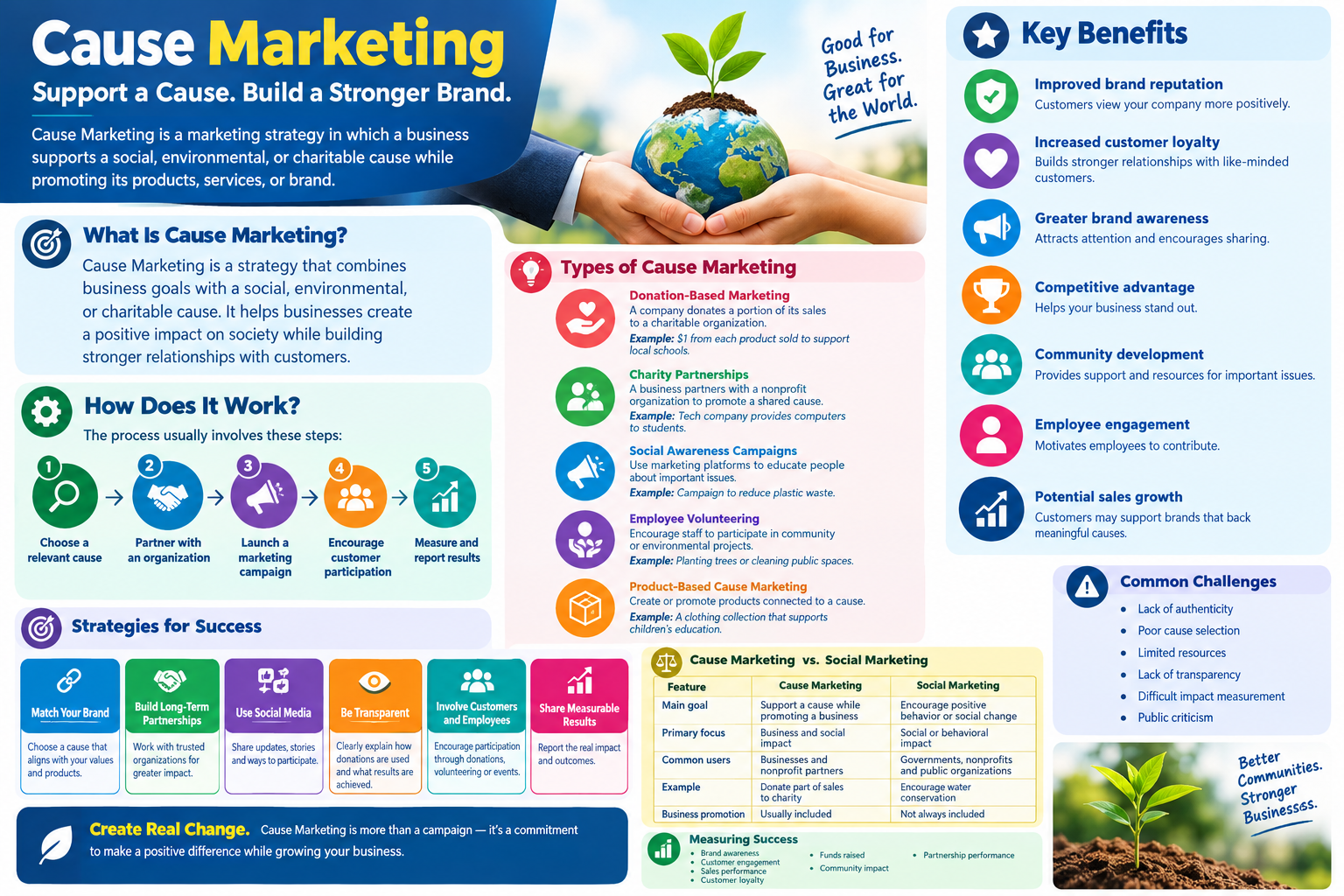
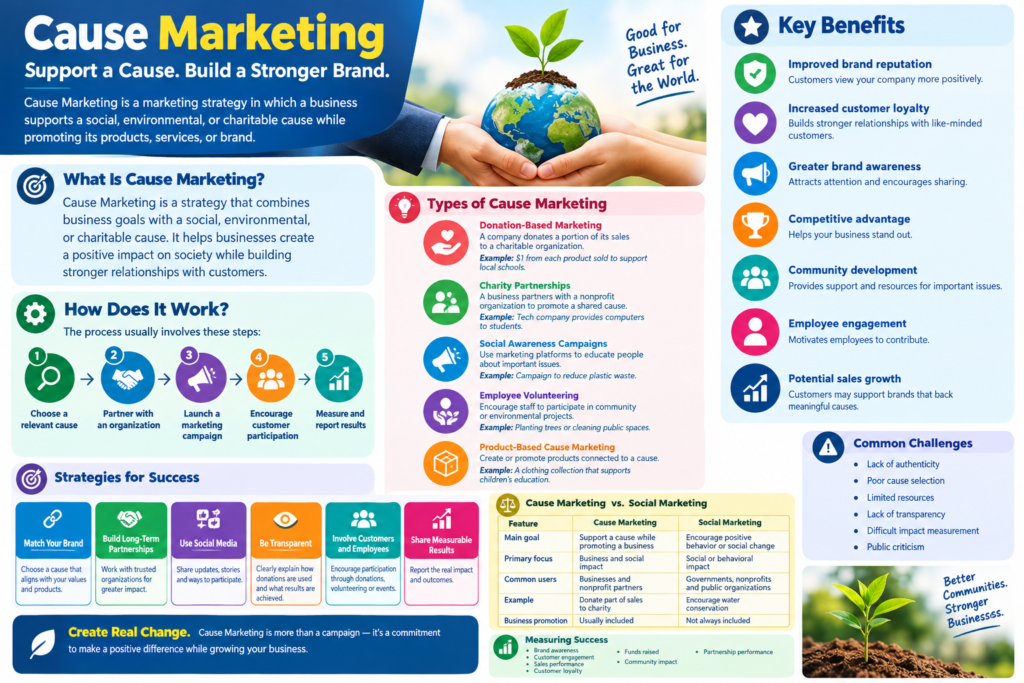
Cause Marketing is a marketing strategy in which a business supports a social, environmental, or charitable cause while promoting its products, services, or brand. The goal is to create a positive impact on society while building stronger relationships with customers.
Common causes supported by businesses include environmental protection, education, poverty reduction, healthcare, clean water, and community development.
For example, a company may donate a portion of its sales to provide clean drinking water to communities in need. This initiative supports an important cause while helping the company attract customers who value social responsibility.
Cause Marketing benefits both businesses and nonprofit organizations when campaigns are genuine, transparent, and focused on creating meaningful change.
How Does Cause Marketing Work?
Cause Marketing connects a business’s marketing activities with a cause that matters to its customers and community.
The process usually involves the following steps:
1. Choose a Relevant Cause
Select a cause that aligns with your company’s values, mission, and target audience. For example, a water company may support clean water access, while a clothing brand may promote environmental sustainability.
2. Partner With an Organization
Businesses can work with charities, nonprofit organizations, community groups, or other institutions to support a specific cause.
3. Develop a Marketing Campaign
Create a campaign that explains the cause, the company’s contribution, and how customers can participate. Campaigns may include social media posts, advertisements, events, or special product offers.
4. Encourage Customer Participation
Invite customers to support the cause by purchasing products, donating money, volunteering, or sharing campaign messages.
5. Measure and Report Results
Track the campaign’s performance and social impact. Share clear information about donations, funds raised, people helped, or environmental improvements achieved.
Types of Cause Marketing
There are several ways businesses can use Cause Marketing to support important causes.
1. Donation-Based Marketing
A company donates a percentage of its sales or a fixed amount from each purchase to a charitable organization.
Example: A supermarket donates $1 for every selected product sold to support local schools.
2. Charity Partnerships
A business partners with a nonprofit organization to promote a shared cause. Both organizations benefit from increased awareness and community engagement.
Example: A technology company partners with an educational nonprofit to provide computers to students.
3. Social Awareness Campaigns
Businesses use their marketing platforms to educate people about important social or environmental issues.
Example: A company launches a social media campaign encouraging people to reduce plastic waste.
4. Employee Volunteering
Companies encourage employees to participate in community projects, charitable activities, or environmental programs.
Example: Employees volunteer to plant trees or clean public spaces.
5. Product-Based Cause Marketing
A business creates or promotes products connected to a particular cause, with some of the proceeds supporting that cause.
Example: A clothing brand sells a special collection and donates part of the revenue to support children’s education.
Benefits of Cause Marketing
Cause Marketing can provide several benefits for businesses, customers, and communities.
- Improved brand reputation: Supporting meaningful causes can help customers view a company more positively.
- Increased customer loyalty: Customers may develop stronger relationships with businesses that share their values.
- Greater brand awareness: Cause-related campaigns can attract attention and encourage people to share marketing messages.
- Competitive advantage: A genuine commitment to social responsibility can help a business stand out from competitors.
- Community development: Campaigns can provide financial support, resources, and awareness for important local issues.
- Employee engagement: Employees may feel more motivated when their company contributes positively to society.
- Potential sales growth: Customers who care about a cause may be more interested in supporting a company that contributes to it.
However, these benefits are not guaranteed. Results depend on the campaign’s credibility, relevance, execution, and actual impact.
Cause Marketing Strategies for Businesses
Businesses can use several strategies to create effective Cause Marketing campaigns.
Choose a Cause That Matches Your Brand
Select a cause that naturally connects with your products, services, or company values. A strong connection makes the campaign more credible and meaningful.
For example, a water supply company could support clean water access, sanitation education, and water conservation.
Build Long-Term Partnerships
Instead of supporting a cause only during a short promotional campaign, consider developing a long-term partnership with a trusted organization.
Long-term support can demonstrate commitment and help create lasting improvements.
Use Social Media Marketing
Share campaign updates, educational content, success stories, and opportunities for customers to participate. Use clear messages to explain how the campaign works.
Be Transparent About Donations
Explain how much money will be donated, which organization will receive it, and what the funds will support. Avoid vague promises that could confuse customers.
Involve Customers and Employees
Encourage people to participate through donations, volunteering, fundraising events, or community activities. Participation can make the campaign more engaging.
Share Measurable Results
Publish updates showing what the campaign has achieved. For example, report the amount raised, the number of students supported, or the number of trees planted when those figures are verified.
Cause Marketing vs. Social Marketing
Cause Marketing and social marketing are related, but they have different primary goals.
| Feature | Cause Marketing | Social Marketing |
|---|---|---|
| Main goal | Support a cause while promoting a business | Encourage positive behavior or social change |
| Primary focus | Business and social impact | Social or behavioral impact |
| Common users | Businesses and nonprofit partners | Governments, nonprofits, and public organizations |
| Example | A company donates part of its sales to charity | A campaign encourages people to conserve water |
| Business promotion | Usually included | Not always included |
Both approaches can help address important issues, but they differ in their primary objectives.
Common Cause Marketing Challenges
Although Cause Marketing offers many opportunities, businesses should understand the potential challenges.
- Lack of authenticity: Customers may distrust campaigns that appear to use social issues only to increase sales.
- Poor cause selection: Supporting a cause that does not align with the brand can confuse customers.
- Limited resources: Donations, partnerships, and campaign activities require time and money.
- Lack of transparency: Unclear information about funds or results can damage a company’s reputation.
- Difficult impact measurement: Some social and environmental benefits take time to measure.
- Public criticism: Companies may face criticism if their actions do not match their campaign promises.
Businesses can reduce these risks by selecting relevant causes, working with credible partners, communicating honestly, and reporting measurable outcomes.
Examples of Cause Marketing
Consider a water company that wants to improve its community relationships and support access to clean drinking water.
The company launches a Cause Marketing campaign in partnership with a local community organization. For every qualifying customer payment or product purchase, the company contributes a clearly stated amount to a community water project.
The campaign explains how the money will be used, encourages customers to participate, and publishes updates about completed activities.
This initiative supports a community need while helping the company strengthen its reputation and customer relationships.
Another example is a supermarket that donates a portion of selected product sales to a food bank. Customers can contribute through their purchases, while the supermarket demonstrates its commitment to reducing hunger.
How to Measure Cause Marketing Success
Businesses should evaluate both marketing performance and the actual impact of their campaigns.
Important metrics include:
- Brand awareness: Changes in how many people recognize or learn about the company.
- Customer engagement: Likes, shares, comments, event participation, and other meaningful interactions.
- Sales performance: Changes in sales during the campaign, while considering other factors that may influence results.
- Customer loyalty: Repeat purchases, retention, and customer feedback.
- Funds raised: The total amount donated or collected for the selected cause.
- Community impact: Verified results, such as students supported, households reached, or trees planted.
- Partnership performance: The effectiveness of collaboration with charitable or nonprofit organizations.
Evaluating both commercial and social outcomes helps businesses understand whether their Cause Marketing efforts are creating real value.
Conclusion
Cause Marketing is a useful strategy that allows businesses to support meaningful social or environmental causes while promoting their brands and building customer relationships.
By choosing relevant causes, partnering with credible organizations, involving customers, and communicating results transparently, businesses can create campaigns that benefit both society and their organizations.
The most effective Cause Marketing campaigns go beyond advertising. They demonstrate genuine commitment, deliver measurable results, and build trust through consistent action.