
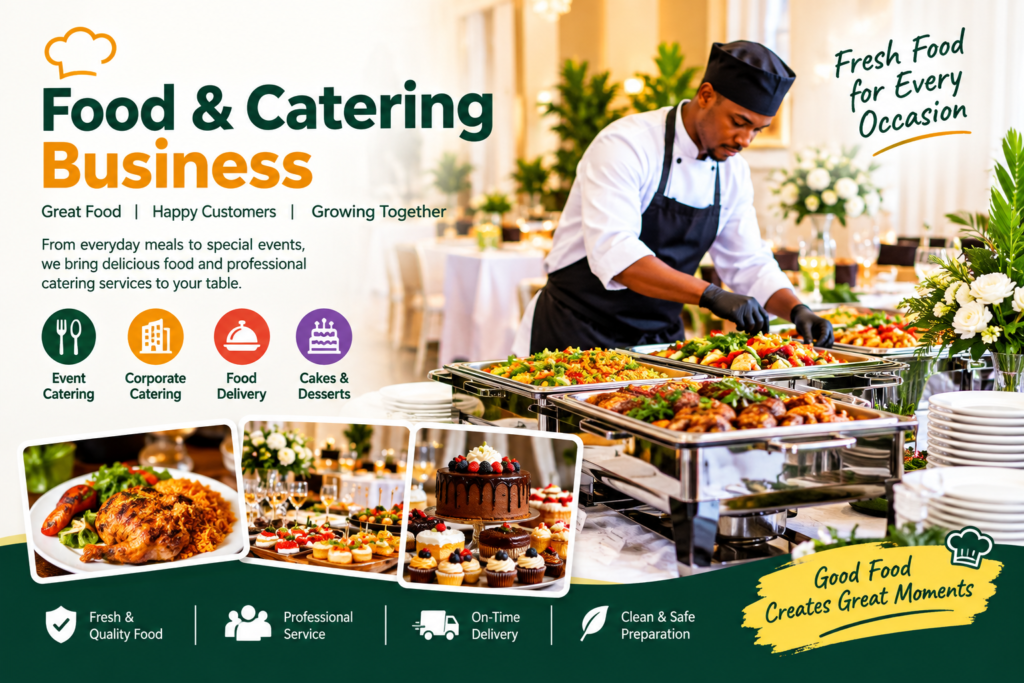
Food & Catering Business: How to Start and Grow a Profitable Business
A Food & Catering Business is a business that prepares and provides food for individuals, families, companies, events, and other customers. It can include catering for weddings, meetings, parties, restaurants, offices, and private gatherings.
With good food, excellent customer service, and proper planning, a Food & Catering Business can become a profitable and sustainable business.
What Is a Food & Catering Business?
A Food & Catering Business prepares meals and delivers or serves them to customers at different locations. Unlike a traditional restaurant, catering businesses can operate from a kitchen and serve customers at events or through delivery.
The business can start small and expand as the number of customers increases.
Why Start a Food & Catering Business?
There are several reasons why this business can be a good opportunity:
- Strong demand: People need food every day and regularly organize events.
- Different customer groups: You can serve families, companies, restaurants, schools, and event organizers.
- Flexible business models: You can offer delivery, event catering, meal preparation, or takeaway food.
- Potential for repeat customers: Satisfied customers can order regularly.
- Scalable: You can start with a small kitchen and expand your team and equipment over time.
Types of Food & Catering Businesses
There are many ways to build a Food & Catering Business.
1. Event Catering
Provide food for weddings, birthdays, conferences, meetings, and other events.
2. Corporate Catering
Prepare meals and refreshments for offices, companies, workshops, and business meetings.
3. Food Delivery
Prepare meals and deliver them directly to customers through phone, WhatsApp, a website, or a delivery platform.
4. Meal Preparation
Prepare ready-to-eat meals for customers who want convenient food during the week.
5. Bakery and Desserts
Sell cakes, bread, pastries, cookies, and other desserts for individuals and events.
How to Start a Food & Catering Business
Step 1: Research Your Market
Identify the types of food customers want, your competitors, popular prices, and the types of events that create demand in your area.
Step 2: Choose Your Food Niche
Choose a specific focus, such as traditional meals, fast food, healthy meals, desserts, corporate catering, or event catering.
Step 3: Create a Menu
Develop a simple menu with food options that are easy to prepare and profitable. Start with a manageable number of dishes rather than offering too many choices.
Step 4: Prepare Your Kitchen
You may need cooking equipment, refrigerators, storage containers, utensils, packaging materials, and cleaning supplies. Make sure your kitchen follows applicable food-safety and hygiene requirements.
Step 5: Set Your Prices
Calculate the cost of ingredients, packaging, labor, transportation, utilities, and other expenses. Then set prices that provide a reasonable profit while remaining competitive.
Step 6: Promote Your Business
Social media can be an effective way to showcase your food. Use high-quality photos, customer reviews, special offers, and clear contact information to attract customers.
How to Make Money
A Food & Catering Business can generate income through:
- Event catering packages
- Corporate meal contracts
- Food delivery
- Individual meal orders
- Party food packages
- Bakery and dessert orders
- Weekly or monthly meal subscriptions
Building relationships with companies and event organizers can create recurring business and more predictable revenue.
Importance of Food Quality
Food quality is one of the most important factors in this business. Customers expect meals to be fresh, tasty, clean, and properly prepared.
Consistent quality can encourage customers to return and recommend your business to others.
Using Technology
Technology can make a Food & Catering Business easier to manage. You can use social media to advertise your menu, messaging apps to receive orders, digital payments to collect money, and spreadsheets or business software to track expenses and sales.
Online ordering can also make it easier for customers to place orders without calling.
Challenges to Consider
A Food & Catering Business can face challenges such as rising ingredient prices, food waste, competition, delivery delays, equipment costs, and changing customer preferences.
Careful inventory management, accurate pricing, good hygiene, and efficient food preparation can help reduce these problems.
Tips for Growing Your Business
To grow your Food & Catering Business:
- Maintain consistent food quality.
- Keep your kitchen clean and organized.
- Provide excellent customer service.
- Create attractive food packaging.
- Use social media regularly.
- Offer catering packages for different budgets.
- Build relationships with companies and event planners.
- Track your costs and profits carefully.
- Ask satisfied customers for reviews and referrals.
- Introduce new menu items based on customer demand.
Conclusion
A Food & Catering Business can be an excellent opportunity for entrepreneurs who enjoy food and customer service. You can start with a small menu and a limited number of customers, then expand as demand grows.
The keys to success are good food, hygiene, reasonable pricing, reliable service, effective marketing, and strong customer relationships. With proper planning and consistent quality, a Food & Catering Business can develop into a successful long-term business.