Delivery & Logistics Business: A Complete Guide to Starting and Growing Your Business
A Delivery & Logistics Business provides transportation and delivery services that help individuals and companies move products, packages, documents, and other goods from one location to another. As online shopping, restaurants, pharmacies, and small businesses continue to grow, reliable delivery services are becoming increasingly important.
Starting a Delivery & Logistics Business can be a profitable opportunity if you provide fast, safe, affordable, and dependable services.
What Is a Delivery & Logistics Business?
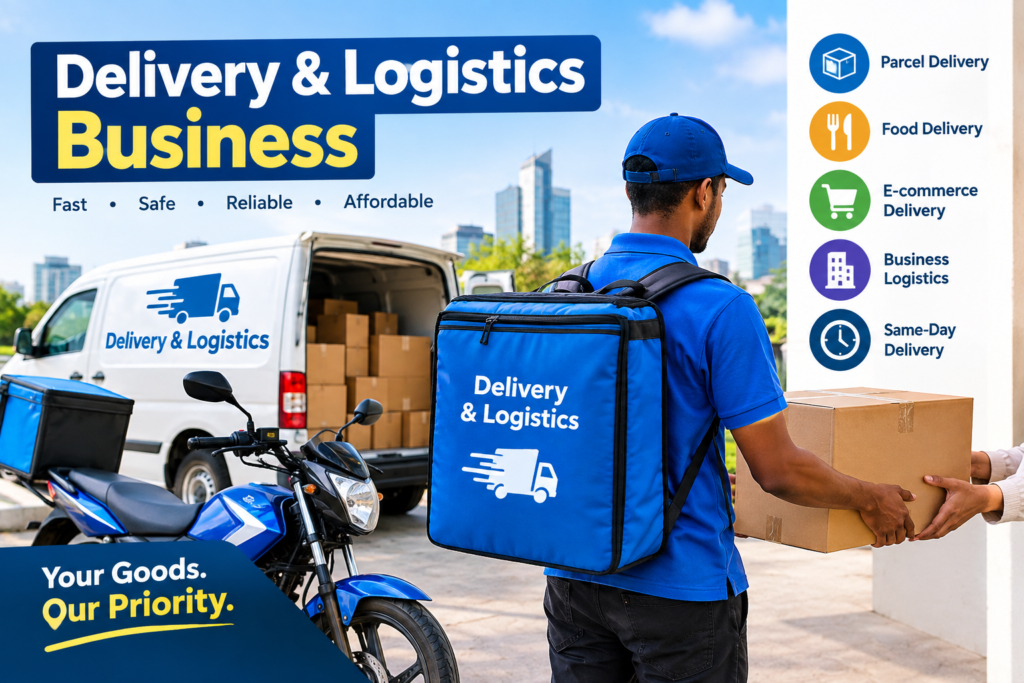
A Delivery & Logistics Business manages the movement of goods between businesses, stores, warehouses, and customers. Depending on the business model, services can include same-day delivery, food delivery, parcel delivery, business-to-business transportation, and scheduled deliveries.
The business can start with one motorcycle, bicycle, car, or small van and expand as customer demand increases.
Why Start a Delivery & Logistics Business?
There are several reasons why this business can be attractive:
- Growing demand: Businesses and customers need convenient delivery services.
- Flexible startup: You can start small with limited equipment.
- Multiple customers: Restaurants, online stores, pharmacies, offices, and individuals can all become customers.
- Recurring income: Business clients may require deliveries every day or every week.
- Easy expansion: You can add more vehicles and drivers as the business grows.
Services You Can Offer
A Delivery & Logistics Business can offer different services depending on the local market.
1. Same-Day Delivery
Customers can order a product and receive it on the same day. This is particularly useful for online stores and urgent deliveries.
2. Food Delivery
You can work with restaurants and food businesses to deliver meals to customers.
3. Parcel Delivery
Deliver documents, packages, clothing, electronics, and other small items between businesses and customers.
4. Business Delivery
Companies can hire your service to transport products, documents, supplies, and other materials between different locations.
5. Scheduled Delivery
Offer regular delivery services for businesses that need products transported at specific times.
How to Start a Delivery & Logistics Business
Starting a Delivery & Logistics Business requires careful planning.
Step 1: Research Your Market
Identify what customers need in your area. Research competitors, delivery prices, popular delivery locations, and businesses that could become potential customers.
Step 2: Choose Your Business Model
Decide whether you want to focus on food, parcels, e-commerce, business deliveries, or a combination of services.
Step 3: Get the Necessary Equipment
Your equipment may include:
- Motorcycle, car, or van
- Smartphone
- GPS or navigation application
- Delivery bags or boxes
- Protective equipment
- Business phone number
- Record-keeping or delivery management software
Step 4: Set Your Prices
Create simple and competitive pricing. You can charge based on distance, package size, delivery type, or a combination of these factors.
Step 5: Find Business Customers
Contact restaurants, online shops, pharmacies, supermarkets, offices, and other businesses. Offer reliable delivery services and flexible pricing.
Step 6: Promote Your Business
Use social media, WhatsApp, Google Business Profile, flyers, referrals, and partnerships to attract customers.
How to Make Money
A Delivery & Logistics Business can generate revenue in several ways:
- Charging customers per delivery
- Monthly contracts with businesses
- Express delivery fees
- Long-distance delivery charges
- Corporate delivery agreements
- Delivery services for online stores
The key to profitability is controlling fuel, maintenance, driver, and operational costs while maintaining a steady number of deliveries.
Technology in Delivery & Logistics
Technology can make a Delivery & Logistics Business more efficient. GPS navigation can help drivers find locations, while digital payment systems can make transactions easier.
Businesses can also use delivery management software to track orders, organize drivers, monitor deliveries, and communicate with customers.
Challenges to Consider
Like any business, logistics has challenges. These may include fuel costs, vehicle maintenance, traffic, delays, difficult addresses, damaged packages, and competition.
Good planning, clear delivery policies, reliable drivers, and strong customer communication can help reduce these problems.
Tips for Growing Your Business
To grow your Delivery & Logistics Business:
- Provide excellent customer service.
- Deliver packages on time.
- Keep your prices competitive.
- Build long-term relationships with businesses.
- Use technology to track deliveries.
- Maintain your vehicles regularly.
- Train drivers to handle customers professionally.
- Ask satisfied customers for referrals and reviews.
Conclusion
A Delivery & Logistics Business can be a strong business opportunity because businesses and consumers increasingly depend on convenient transportation and delivery services. You do not necessarily need a large fleet to get started. With one vehicle, good planning, reliable service, and effective marketing, you can begin small and expand over time.
The most important factors are speed, safety, affordability, reliability, and customer service. By focusing on these areas, a Delivery & Logistics Business can build a strong reputation and develop long-term customers.