
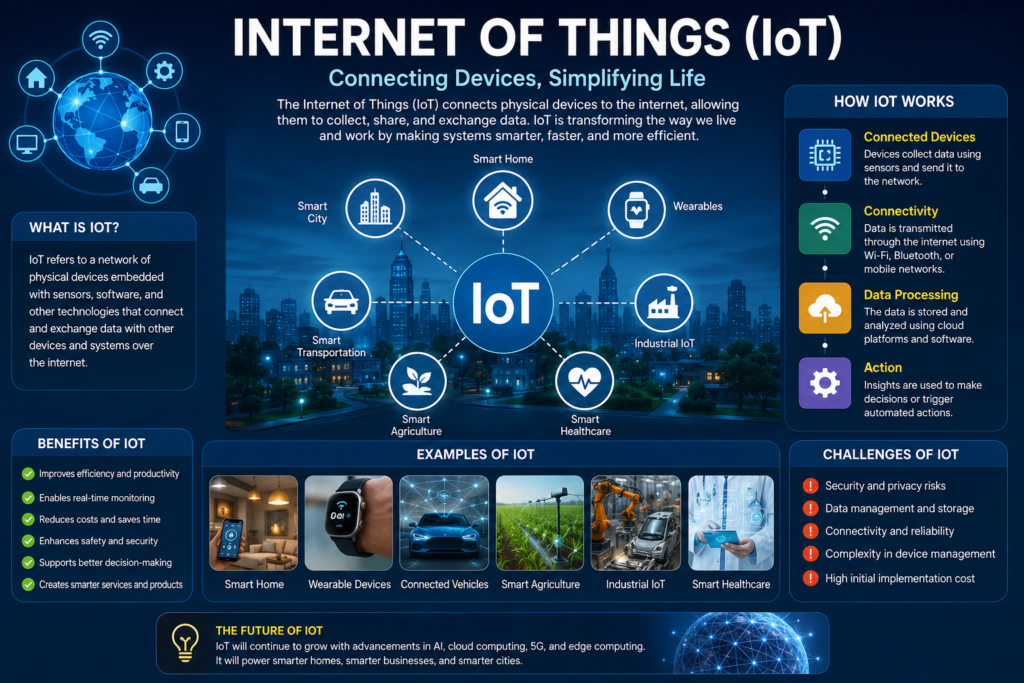
Internet of Things (IoT): How Connected Devices Are Changing the World
Internet of Things (IoT) is one of the most important technologies transforming the way people, businesses, and industries use connected devices. From smart homes and wearable devices to modern factories and connected vehicles, IoT allows physical devices to collect, share, and use data through the internet.
As technology continues to develop, Internet of Things (IoT) is becoming an important part of everyday life and modern business.
What Is Internet of Things (IoT)?
Internet of Things (IoT) refers to a network of physical devices that are connected to the internet and can communicate with other devices or systems.
These devices can include sensors, smart appliances, vehicles, industrial machines, cameras, watches, and many other connected products. They collect data through sensors and send that information to software or cloud platforms for analysis and action.
For example, a smart thermostat can detect the temperature inside a home and automatically adjust the heating or cooling system.
How Does IoT Work?
The Internet of Things (IoT) generally works through four main components:
1. Connected Devices
Devices contain sensors that collect information such as temperature, location, movement, pressure, or energy usage.
2. Internet Connectivity
The collected information is transferred through technologies such as Wi-Fi, Bluetooth, cellular networks, or other communication systems.
3. Data Processing
IoT platforms process and analyze the collected data. Cloud computing and artificial intelligence can also be used to identify patterns and provide useful insights.
4. Automated Actions
Based on the data, a system can automatically perform an action. For example, a smart security system can send an alert when unusual movement is detected.
Examples of Internet of Things (IoT)
IoT is already being used in many areas of life and business.
Smart Homes: Smart lights, security cameras, thermostats, door locks, and appliances can be controlled and monitored remotely.
Wearable Devices: Smartwatches and fitness trackers can collect information about activity, movement, and other personal metrics.
Connected Vehicles: Modern vehicles can use connected sensors to provide navigation, maintenance information, safety alerts, and other services.
Smart Agriculture: Farmers can use IoT sensors to monitor soil conditions, weather, water usage, and crops.
Smart Cities: IoT can help cities monitor traffic, street lighting, waste management, energy consumption, and public infrastructure.
Industrial IoT: Factories can connect machines and sensors to monitor production, detect problems, and improve efficiency.
Benefits of Internet of Things (IoT)
The Internet of Things (IoT) provides several important benefits:
Better Efficiency
Connected devices can automate repetitive tasks and help organizations use resources more efficiently.
Real-Time Monitoring
Businesses can monitor equipment, systems, and operations in real time.
Reduced Costs
IoT can help identify equipment problems early, reduce unnecessary energy consumption, and improve operational efficiency.
Better Decision-Making
IoT generates large amounts of data that businesses can analyze to make more informed decisions.
Improved Customer Experience
Connected products can provide faster services, personalized experiences, and easier remote control.
Challenges of IoT
Although Internet of Things (IoT) offers many advantages, it also has challenges.
Security: Connected devices can become targets for cyberattacks if they are not properly protected.
Privacy: IoT devices can collect large amounts of data, making privacy and responsible data management important.
Connectivity: IoT systems depend on reliable network connections and infrastructure.
Device Management: Managing a large number of connected devices can become complicated for businesses.
The Future of Internet of Things (IoT)
The future of Internet of Things (IoT) is closely connected with artificial intelligence, cloud computing, edge computing, and advanced networks.
AI can help IoT systems analyze data and make smarter decisions, while edge computing can process information closer to where it is collected. These technologies can make connected systems faster, more intelligent, and more responsive.
As more devices become connected, IoT is expected to continue influencing homes, businesses, healthcare, transportation, agriculture, manufacturing, and smart cities.
Conclusion
Internet of Things (IoT) is changing how physical devices communicate, collect information, and perform tasks. By connecting devices to networks and using data intelligently, IoT can improve efficiency, reduce costs, automate processes, and support better decisions.
As technologies such as AI, cloud computing, and edge computing continue to advance, Internet of Things (IoT) will remain an important technology for the future of the digital world.